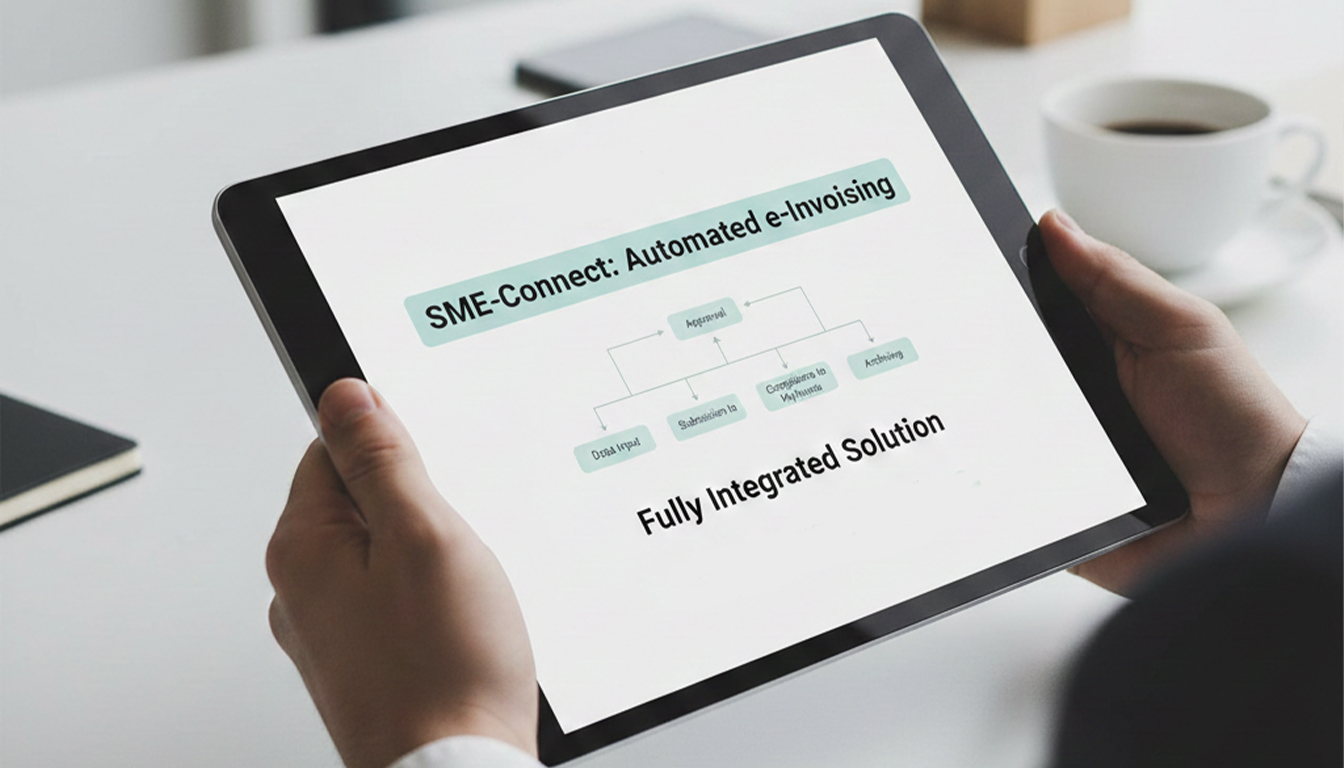


South Korea E-Invoice Software Built Around Your Business Systems
Invoice Factory gives South Korea organizations a dedicated layer for electronic tax invoice operations. It receives transaction data from ERP, accounting, CRM, API, or custom systems, prepares invoice information, coordinates issuance and transmission, and returns processing details to existing systems.
Make E-Invoicing Part of Your Workflow
Instead of treating E-tax invoicing as a separate finance activity, Invoice Factory connects invoice preparation with the applications generating your underlying business transactions.
- ERP-Connected Invoice Processing
- Structured Tax Invoice Preparation
- Configured Data Validation
- NTS Transmission Coordination
- Invoice Status Visibility
Why Businesses Use Invoice Factory
Invoice Factory connects South Korea e-tax invoice data preparation, issuance, delivery, and NTS transmission with ERP, ASP, accounting, and custom systems, reducing repeated manual handling across finance operations more easily.
Start With Transaction Data
Invoice Factory receives sales, customer, product, tax, and accounting information from existing applications, allowing E-invoice workflows to begin with established transaction data now.
Apply Rules Before Issuance
Incoming information passes through configured mapping and validation checks before issuance, reviewing required fields, customer details, tax attributes, totals, and other transaction data early.
Prepare Structured Invoices
After validation, Invoice Factory prepares source information for E-tax invoicing, creating a controlled processing layer between operational applications and approved issuance channels.
Coordinate NTS Processes
For registered ERP workflows, Invoice Factory supports E-invoice transmission activities and tracks processing information through connected NTS workflows and related responses internally.
Keep Teams Informed
Processing responses return to connected systems, helping finance teams identify completed invoices, rejected information, transmission issues, and exceptions without switching between work apps.
Preserve Useful Invoice Records
Invoice information remains organized after processing, giving finance teams a useful history for reconciliation, internal review, exception investigation, and document-related activities and records.
OUR HAPPY CLIENTS
Connected Invoicing for Modern Operations
Invoice Factory links data, checks, preparation, transmission, and responses in one workflow, so Korean firms manage e-tax invoices and keep systems in place with less manual work daily.
Key Features of Invoice Factory
Invoice Factory combines integration, validation, preparation, transmission, and processing visibility for Korean daily e-tax invoice workflows.
ERP & Data Intake
Receives transaction and customer information from ERP and business applications for invoice processing.
Invoice Data Validation
Validates invoice data for missing, inconsistent, or incorrectly mapped information before processing.
Electronic Tax Invoice Preparation
Converts approved information into structured tax data for South Korea electronic invoice processing.
NTS Process Coordination
Coordinates transmission activities with the National Tax Service and registered e-invoice platforms.
Processing Response Management
Returns processing responses to connected systems, highlighting valid documents and status exceptions.
ERP and ASP Connectivity
Connects ERP or ASP environments while preserving existing core business applications and workflows.
Exception Handling
Identifies rejected, incomplete, or problematic invoice data for investigation and corrective action.
Invoice Record Organization
Organizes processed invoice records for reconciliation, review, controls, and ongoing document handling.
Invoice Reconciliation Support
Matches processed e-tax invoice records with ERP transaction data to support financial reconciliation and identify discrepancies.
South Korea E-Invoicing, Connected Properly
South Korea organizations can use Invoice Factory to connect business applications with e-invoice workflows, managing validation, preparation, transmission, and processing information centrally.
Data
Collects relevant invoice information from connected business applications and transaction sources.
01
Integration
Links ERP, accounting, CRM, API, file-based, and custom systems with the invoice workflow.
02
Validation
Checks configured invoice information before E-documents continue through processing.
03
Preparation
Structures approved transaction information for the applicable E-tax invoice process.
04
Transmission
Coordinates configured transmission activities associated with South Korea E-tax invoice workflows.
05
Monitoring
Returns processing information so teams can identify completed documents and exceptions.
06
Records
Keeps invoice information organized for reconciliation, review, and ongoing document management.
07
Architecture
Provides a flexible processing layer that can fit around existing business technology.
08
Insights & Innovations
Explore Our Blogs

Understand how UAE e-invoicing data field validation rules vary across different invoice scenarios, including standard invoices, credit notes, and cross-border transactions. Learn how structured validation ensures compliance, reduces errors, and streamlines invoice processing for accurate submissions.

UAE QR code requirements play a key role in ensuring invoice authenticity and traceability under the e-invoicing framework. These codes embed critical transaction data that enables real-time verification and reduces the risk of fraud. Understanding how QR-based validation works helps businesses maintain compliance and build trust in digital invoicing processes.

SBDH plays a critical role in UAE e-invoicing by enabling secure document identification and routing between systems. It ensures that each invoice carries standardized metadata for accurate delivery, validation, and interoperability across networks. Understanding SBDH helps businesses build compliant and error-free e-invoicing integrations.

Understanding UAE invoice data fields is essential for structured submission and seamless compliance with upcoming e-invoicing regulations. Each field, from supplier details to tax breakdowns, must follow a defined format to ensure accurate validation and successful transmission. A clear grasp of these requirements helps businesses avoid rejections and streamline their invoicing workflows.

Designing an efficient UAE e-invoicing approval workflow is critical for faster validation and real-time compliance. By aligning finance rules with automated invoice checks, businesses can reduce delays, minimize errors, and ensure seamless validation under the 2026 mandate.

UAE e-invoicing is not just a compliance shift, it is a structural change across finance workflows and IT systems. This change management plan outlines how organizations can align processes, technology, and teams to transition smoothly toward invoice automation while minimizing disruption and risk.
FAQs Invoice Factory E-Invoicing Service in South Korea
What does Invoice Factory do for South Korea businesses?
Invoice Factory provides an integration and processing layer for E-tax invoice workflows in South Korea. It can receive information from ERP, accounting, CRM, API, or custom systems, validate configured invoice data, prepare electronic invoice information, coordinate applicable processing and transmission activities, return responses, and maintain organized records. This helps finance teams manage invoicing through connected systems rather than repetitive manual processes.
Can Invoice Factory work with South Korea ERP or ASP environments?
Yes. South Korea’s National Tax Service recognizes E-tax invoice issuance through registered ERP and ASP systems, alongside Hometax and other permitted methods. Invoice Factory can work as a connected processing layer around an organization’s existing technology environment, helping move transaction information into the appropriate workflow while supporting validation, document preparation, transmission coordination, and processing-status management.
How does Invoice Factory support NTS-related invoice processing?
Invoice Factory can coordinate the workflow surrounding electronic tax invoice transmission and return processing information to connected business applications. For ERP- or ASP-based issuance environments, the National Tax Service distinguishes invoice issuance from transmission to the NTS. The platform can therefore help organizations structure the data, monitor configured transmission activities, identify exceptions, and maintain clearer operational visibility across the electronic invoicing process.
Can the software validate invoice information before processing?
Yes. Invoice Factory can apply configured validation and mapping rules before invoice information proceeds through the electronic workflow. Depending on the organization’s setup, checks can cover required fields, customer information, transaction details, tax attributes, totals, relationships between records, and other configured requirements. Identifying problematic information earlier can reduce repetitive corrections and give accounting teams better control over electronic invoice preparation.
Why use E-invoice software instead of handling invoices manually?
E-invoice software can connect the information already held in ERP and accounting applications with the electronic tax invoice workflow, reducing the need for duplicate data entry and repeated portal-based activities. Invoice Factory additionally provides validation, structured processing, transmission coordination, response handling, and invoice records, giving South Korea organizations a connected environment for managing electronic invoicing operations more consistently.
