



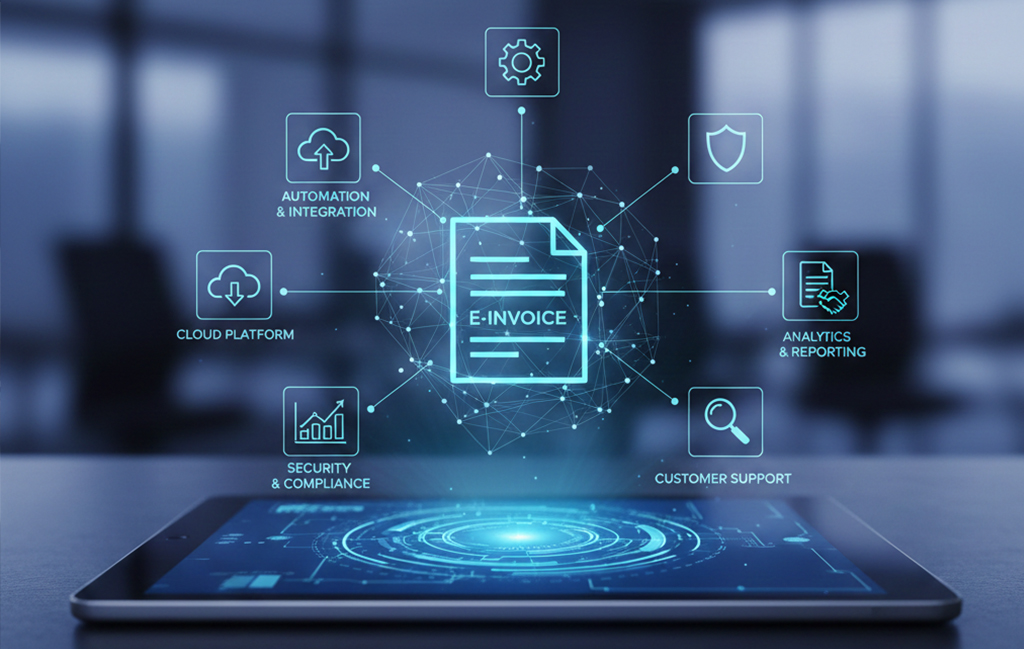

Advintek's eInvoice as a Service for South Korea's Digital Tax Workflow
Electronic tax invoicing becomes simpler when invoice data flows from business systems into structured workflows. Advintek’s South Korea e-invoicing platform organizes invoice data, validates records, prepares tax invoices, manages transmission, and maintains digital records without manual document handling.
Invoice Factory accepts data from accounting, ERP, and operational systems, managing processing between source records and e-invoicing workflows. It helps finance teams reduce duplicate entry, detect missing data, monitor activity, and maintain organized invoice records.
What Does e-Invoice as a Service Cover?
Advintek’s e-Invoice as a Service provides South Korean businesses with a managed environment for electronic tax invoicing. Invoice Factory coordinates data preparation, validation, document generation, transmission, and record management within one structured workflow, reducing separate operational processes.
The service suits firms using ERP platforms, accounting software, billing systems, or other apps. Advintek converts data from these systems into e-invoicing workflows, supporting NTS transmission and recognized invoice channels while helping teams manage submission and digital records securely online.
For HomeTax, ERP, or ASP users, Advintek adds an integration layer that reduces manual work, improves invoice visibility, and strengthens workflow control.
A Three-Stage Path for Digital Invoices
We use data, so Invoice Factory skips duplicate entry and runs invoice steps without asking staff to rekey details, when and as needed, too.
Capture & Validate Data
Invoice Factory receives invoice data from connected ERP, accounting, API, or file systems, then validates required fields, tax details, document links, and relationships before invoices enter configured electronic invoicing workflows for processing and secure transmission.
Structure & Transmit Invoices
Validated invoice information is transformed into the required electronic structure, checked for readiness, and routed through set workflows, also supporting NTS reporting, approved channels, and controlled invoice transmission to destinations as configured for secure issuance.
Return Status & Records
Processing results are returned to connected systems, while invoice records remain organized for exception handling, reconciliation, operational review, status tracking, and ongoing record management across the configured electronic invoicing workflow for future reference as well.
Why Businesses Use Invoice Factory
Invoice Factory connects systems, processes invoice data, manages workflows, and handles documents through one integrated service layer.
Source Data Connectivity
Bring invoice information from ERP, accounting, billing, or operational applications into one controlled processing workflow without rebuilding existing business systems.
Intelligent Data Checks
Configured validation rules examine incoming invoice information and help identify missing, inconsistent, or unsuitable data before further processing takes place.
Structured Document Generation
Transform approved source information into organized electronic tax invoice data, helping businesses maintain consistency across recurring invoice transactions.
NTS Workflow Coordination
Support the electronic processes surrounding NTS transmission while keeping invoice preparation and source-system information connected through a centralized workflow.
Exception Visibility
Give finance teams clearer visibility into documents that require correction, additional information, or further processing instead of leaving exceptions buried within manual processes.
ERP-Friendly Architecture
Work alongside established ERP and accounting environments, allowing businesses to modernize electronic invoicing without replacing the systems already responsible for their financial operations.
Centralized Records
Keep electronic invoice information organized within a connected digital environment, making documents and processing information easier to locate when required.
Operational Scalability
Create a repeatable invoice-processing structure that can accommodate changing transaction activity without requiring finance teams to manage every document manually.
Who Can Use the Service?
Advintek’s e-invoicing service connects existing systems, reduces manual invoice work, and structures digital tax invoice workflows for growing businesses.
ERP-Driven Businesses
ERP-based organizations can connect source transactions with structured E-invoice processing workflows.
01
Accounting-Led Businesses
Accounting-led companies can centralize invoice preparation without duplicating financial data across platforms.
02
Retail & Distribution
Retail and distribution businesses can connect transaction data with automated E-invoice workflows.
03
Professional Practices
Professional practices can manage recurring billing through structured processing and organized invoice records.
04
Multi-Department Organizations
Multi-department teams can standardize invoice validation, processing, transmission, and record handling procedures.
05
Frequently Asked Questions
Can Invoice Factory work with our existing ERP?
Yes. Invoice Factory can be positioned between your existing ERP or accounting environment and the electronic invoicing workflow. Relevant transaction information can be transferred through supported integration methods, allowing businesses to retain their current financial systems while introducing structured invoice validation, document processing, transmission coordination, and digital record management.
Does the service replace HomeTax?
Advintek’s service is not intended to redefine the role of HomeTax as an NTS-operated electronic tax invoice channel. Instead, it provides businesses with an integration and processing layer for managing invoice information. Depending on the configured workflow, businesses can connect their existing systems with appropriate electronic invoicing processes rather than manually recreating every invoice.
What happens before an electronic tax invoice is transmitted?
Before transmission, invoice information can pass through configured mapping and validation checks. Invoice Factory can examine relevant customer, transaction, tax, and document information, identify incomplete or inconsistent data, and prepare the invoice structure for the next processing stage. This helps reduce avoidable issues caused by incomplete source information.
Can we send invoice information without an ERP integration?
Yes. Businesses do not necessarily need to begin with a full ERP integration. Depending on the agreed implementation, invoice information can enter the workflow through supported file, upload, API, or other connection methods. This allows organizations to establish a managed electronic invoicing process while retaining the option to introduce deeper system integration later.
How does Advintek handle rejected or problematic invoice data?
When invoice information does not satisfy configured validation conditions, the workflow can identify the relevant issue before the document continues. This gives the business an opportunity to correct the source information rather than allowing incomplete data to move further through processing. Status and exception information can then be returned to the appropriate team.
Insights & Innovations
Explore Our Blogs

Understand how UAE e-invoicing data field validation rules vary across different invoice scenarios, including standard invoices, credit notes, and cross-border transactions. Learn how structured validation ensures compliance, reduces errors, and streamlines invoice processing for accurate submissions.

UAE QR code requirements play a key role in ensuring invoice authenticity and traceability under the e-invoicing framework. These codes embed critical transaction data that enables real-time verification and reduces the risk of fraud. Understanding how QR-based validation works helps businesses maintain compliance and build trust in digital invoicing processes.

SBDH plays a critical role in UAE e-invoicing by enabling secure document identification and routing between systems. It ensures that each invoice carries standardized metadata for accurate delivery, validation, and interoperability across networks. Understanding SBDH helps businesses build compliant and error-free e-invoicing integrations.

Understanding UAE invoice data fields is essential for structured submission and seamless compliance with upcoming e-invoicing regulations. Each field, from supplier details to tax breakdowns, must follow a defined format to ensure accurate validation and successful transmission. A clear grasp of these requirements helps businesses avoid rejections and streamline their invoicing workflows.

Designing an efficient UAE e-invoicing approval workflow is critical for faster validation and real-time compliance. By aligning finance rules with automated invoice checks, businesses can reduce delays, minimize errors, and ensure seamless validation under the 2026 mandate.

UAE e-invoicing is not just a compliance shift, it is a structural change across finance workflows and IT systems. This change management plan outlines how organizations can align processes, technology, and teams to transition smoothly toward invoice automation while minimizing disruption and risk.
Ready to Rethink South Korea e-Invoicing?
Your ERP already contains the information needed to create invoices. Advintek's role is to connect that information with the electronic tax invoice workflow, applying data checks, document processing, transmission coordination, status handling, and record management without forcing your finance team to rebuild its existing operations.
